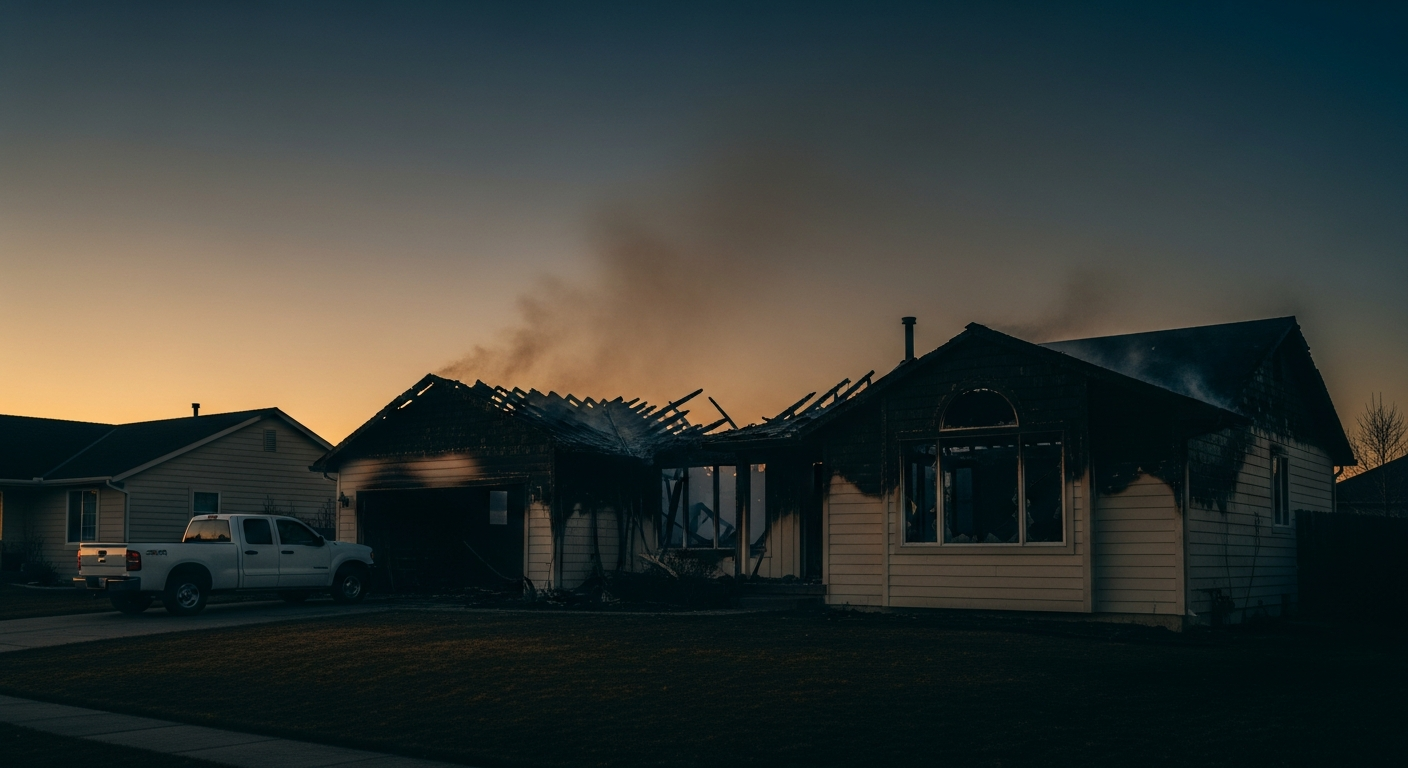
Did Their Sales Guy Show Up Before The Fire Department Even Left?
Or did he sleep in his truck in your driveway so he could be the first voice you heard when you woke up?
Or call us directly at 713-369-4300
Ten minutes with somebody who has watched this exact playbook run a thousand times.

What's Happening To You Is A Script. Here's What's In It.
This isn't aggressive sales. It's a playbook. Every high-pressure sales operation in the country, from storm-chaser roofers to timeshare salesmen to the guy in your driveway, runs the same handful of psychological levers, mapped out in Robert Cialdini's research forty years ago.[1] The script has barely changed since.
The free board-up, the free tarp, the free 360 scan. That's reciprocity. Your brain treats unsolicited gifts as a debt that needs to be paid back.
Three big guys standing in your driveway while one of them talks. That's social proof and authority. You're outnumbered. They look official. Your nervous system reads it as "this is what is supposed to happen."
The chat about your family, your dog, the framed photos on the wall. That's liking. The friendlier the rep, the harder it gets to say no.
"We've got to start tonight or you'll lose coverage." That's manufactured scarcity. There's no actual deadline on most of what he's telling you. He invented a clock so your brain skips the part where you think it through.
But the deepest lever, and the one almost every homeowner misses, is commitment and consistency. This is the real reason he is so eager to do "free" services in the first place.
Here's how it works. Every small thing he does to your house before you sign the big contract makes signing the big contract more likely. The board-up isn't a favor. It's a wedge. The scan isn't a service. It's another wedge. Each one is a small commitment from you to him, and your brain does not want to feel inconsistent by then refusing the next, bigger commitment. That's not weakness. That is how human decision-making works. It's been studied for fifty years and he knows the research better than you do.
The minute he senses you wavering, he will find more work he can do "right now to help you out." More mitigation. More documentation. More guys he can send tomorrow morning. Each additional task is another wedge. He is not being generous. He is stacking commitments on you so the signature feels like the natural next step instead of a separate decision.
The whole sequence runs in maybe forty-five minutes. None of it is accidental. The guy in your driveway is not winging it. He is running a script taught at sales seminars and refined for fifty years, and he is running it on you right now.
You don't owe him anything. You didn't ask him to come. He came because he saw smoke.
It is not rude to say no. It is not rude to take his card, walk inside, and call somebody else. He's a professional. He does this every day. He already knows some of the people he pitches don't end up signing. He's not going to be hurt. He's going to move on to the next house. You should be doing the same.

Here's The Playbook You Use Back On Him
You don't have to throw him out. You don't have to be rude. You don't even have to make a decision today. You just have to use the right moves.
These scripts aren't soft. Each one is a specific negotiation technique, drawn from the same body of work FBI hostage negotiators and high-stakes business negotiators use to defuse pressure without breaking rapport.[2] They short-circuit the exact moves he's running on you.
The Accusations Audit
You name the objection he was about to raise, before he raises it.
"I know this is going to sound ungrateful after everything you've done tonight. But we're not going to be in a position to sign anything until we've had time to think it through. Please leave your card and we'll be in touch tomorrow."
Why it works: by naming the "ungrateful" charge yourself, you have already disarmed it. There's nothing left for him to push against. The reciprocity pressure he was about to apply has been pre-empted.
The Calibrated Question
You ask him a question he cannot answer cleanly without proving your point.
"How am I supposed to sign a half-million-dollar contract in the first thirty minutes of meeting somebody?"
Why it works: he literally cannot answer that question without sounding pushy. The question puts the problem back on him. Any answer he gives proves you should slow down. Calibrated questions are the single most effective tool for stopping a sales sequence cold.
The Reciprocity Reversal
You break the gift. Then you hold the line.
Say this first:
"I'd like to pay you for the board-up and the scan. Send me an invoice. Then we can talk later about whether we go forward with the rest of the work."
Now, what he will probably do. He won't reach for an invoice book. He's trained to deflect. He will say something close to this: "Oh, don't worry about that, we can take care of all of it together. If you want to just get everything started right now, I've got the work authorization right here, we can knock it out." He is redirecting you back to the big contract. The "free" services were never his profit center. The signature is. And every additional thing he can do tonight makes the signature feel more inevitable.
Hold the line. Say this, slightly firmer:
"I understand. We're not signing anything tonight. Please send me an invoice for what's already been done. We'll handle the rest tomorrow."
If he keeps deflecting, drop the warmth. Say this:
"I've told you we're not signing tonight. We need some time alone. Please leave your card and an invoice."
Why this works: the moment you force him to separate the small work from the big contract, in writing, with a price attached, his playbook breaks. He can't keep stacking "free" favors to build commitment. He can't push the signature on you tonight. Either he writes the invoice and leaves, which means his night lost money. Or he leaves to chase a more profitable house. Either way, you win.
After he leaves, call us. We've watched this exact sequence run a thousand times. We'll tell you what just happened, what's already on the table that you may not realize is on the table, and what to do in the next twenty-four hours. No pressure to hire us. Just clear information from somebody who knows the script.
Or call us directly at 713-369-4300
We've watched this exact play run a thousand times. The next move is the one most homeowners get wrong.
The Math He's Running On You
The board-up cost him maybe a thousand dollars. The 360 scan cost a few hundred. The tarp cost another few hundred. Round it up. Call it two thousand dollars, generously.
What is he trying to capture? On a serious house fire, the total insurance money for mitigation and rebuild usually runs between two hundred fifty thousand and a million dollars. His profit margin on that work is twenty to forty percent. A signed work authorization can put fifty thousand to four hundred thousand dollars in his pocket.
He is spending two thousand to capture two hundred thousand. That's why he is still in your driveway. That's why he won't leave. The longer he sits there, the higher the chance the math works in his favor.
His investment
$2,000
Board-up, scan, tarp
His capture
$50K-$400K
Signed work authorization
That is why he won't leave your driveway.

It Says "Work Authorization." Read It Again.
It's not a permission slip. It's a contract. In most cases, it gives him the right to bill your insurance company directly, at his rates, for whatever he decides to do. The "free" services you already accepted are not free. They'll be invoiced against your claim. You'll see the bill later, when it's too late to negotiate.
Buried inside most of these contracts is a clause called an Assignment of Benefits, sometimes labeled a Direct Payment Authorization.[5] That single clause tells your insurance company to send your money directly to the contractor instead of to you. Once it's signed, you no longer control the check. If the work is sloppy, slow, or just wrong, you have almost no leverage to push back. The contractor has the money. You have the problem.
The contract often also lets him talk directly to your insurance company on your behalf, control the scope of work, and lock you out of the conversation about your own claim. Once signed, you are no longer the customer. You are the address.
Or call us directly at 713-369-4300
Twenty minutes with us before you sign could be worth six figures.

Think About Where You'll Be A Year From Now
Forget the contract for a second. Forget the assignment of benefits. Forget the "free" services. Ask yourself a harder question.
How are you going to feel six months in, when the workmanship has dropped off and the calls aren't getting returned?
How are you going to feel a year in, when your house still isn't finished, your family is still living somewhere else, and the project manager has changed three times?
You're about to make a decision, in the first thirty-five minutes of meeting a stranger, that hands him control of the most expensive home repair project of your life. Half a million dollars, more in some cases. You're going to give him that based on how he talks?
The fact that you're on this page right now, doing research, means your instincts are working. Listen to them. The people who come out of this clean are the ones who slowed down and found a team that's clean.

Under Texas Law, One Person In This Process Is Legally Required To Protect You
Not the insurance company.
Their adjuster works for the insurance company. His job is to pay out as little as he can get away with.
Not the contractor.
The contractor's job is to do the work and bill for it. The bigger the bill, the better his year. And here's something most homeowners don't realize. The contractor is not legally allowed to negotiate with your insurance company on your behalf.[3][4] If the insurance company comes back with a scope or a number he doesn't like, he has no real recourse. He can't invoke appraisal. He can't submit a signed proof of loss. He can't do any of the things that actually move the needle in a claim. His only fallback is to tell you to invoke appraisal yourself, which puts the entire fight back on your shoulders.
The one person in this entire process with a legal duty to your financial interests, under Texas law, is a licensed Public Adjuster.[3]
A Public Adjuster works for you, and only for you. We are legally required to advocate for your full recovery under the policy you've been paying premiums on for years.
A Public Adjuster can do all of it. We negotiate directly with the insurance company. We invoke appraisal when it's the right move. We submit signed proofs of loss and sworn statements. We bring in engineers, industrial hygienists, and outside consultants when the insurance company's scope falls short. These are the tools that actually move the needle in a claim, and they are tools the contractor in your driveway is not legally allowed to use.
Here's the thing. If you really like the guy standing in your driveway, and you want to hire his company to do the work, that's fine. Hire him. What you still need, separately, is somebody whose financial interests are tied to yours. Somebody who only gets paid when you get paid. Somebody making sure the work that gets done is the work that actually needs to get done, and that you stay in control of the money. That's what we do.
Hire whatever contractor you want to swing the hammer. Just don't let him be the one talking to your insurance company.
It's Not Opinion. The Numbers Are Public.
Florida government researchers analyzed property insurance claims handled by Citizens Property Insurance Corporation over a two-year period. Here's what they found.[6]
574%
Higher average settlement with a licensed Public Adjuster, even after the adjuster's fee.
Source: Florida Office of Program Policy Analysis and Government Accountability, Report 10-06 (2010). Citizens Property Insurance 2008-2009 data.
For catastrophe claims, the difference was even larger.
You've been paying premiums for years. You're entitled to every dollar of coverage your policy allows. Most homeowners never see those dollars, because they don't know how to document, present, or fight for them. That's the entire reason this profession exists.
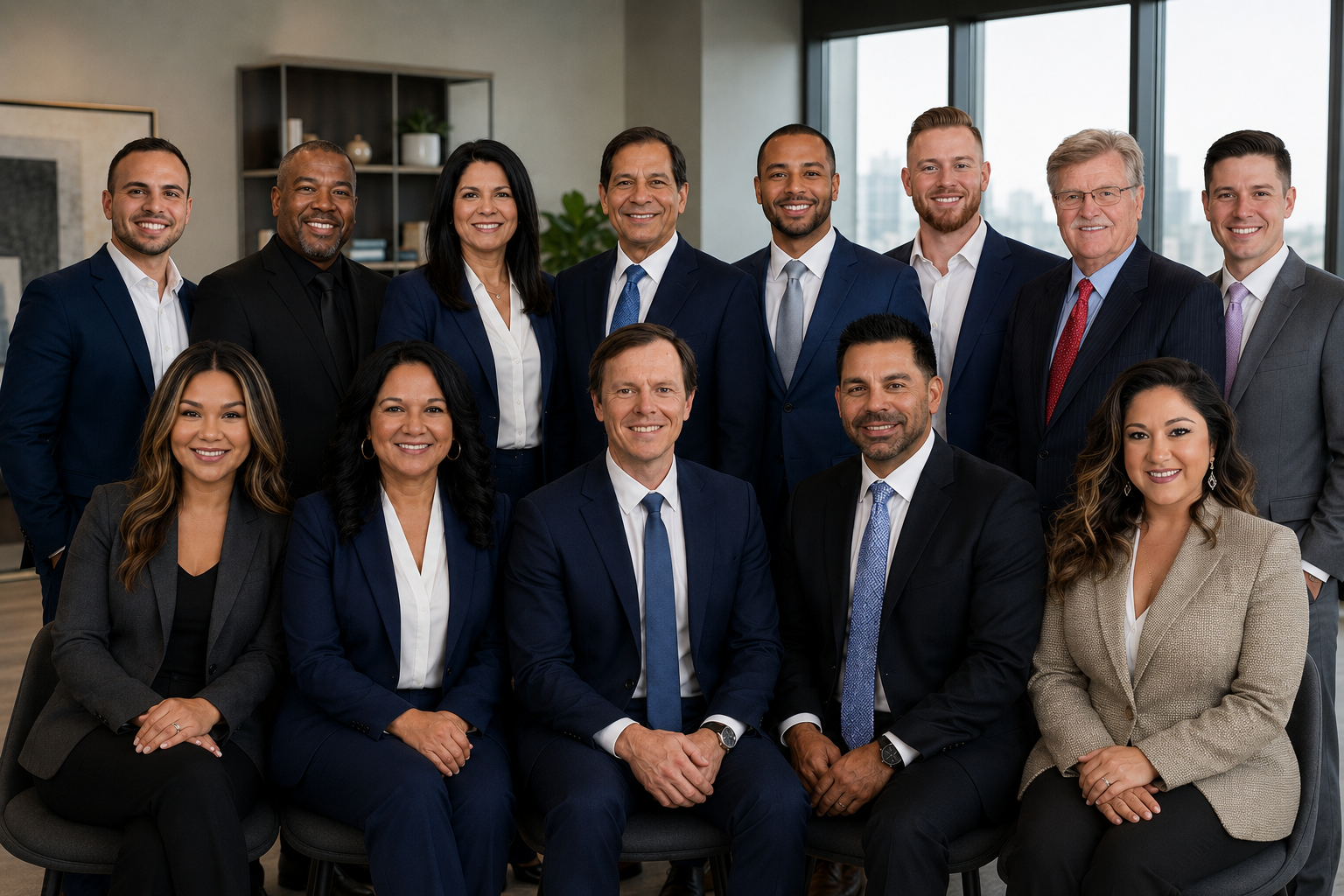
Sixteen Years Of Fighting For Texas Homeowners
Crossroads Insurance Recovery Advocates has been a licensed Public Adjuster in Texas for sixteen years. We've helped homeowners and business owners recover more than five hundred million dollars in insurance settlements. We've earned seven BBB awards and hold one hundred thirty-three five-star Google reviews, more than any other public adjusting firm in the state of Texas. That didn't happen by accident. It happened because of how we treat our people.
We specialize in fire and high-complexity property losses. This is what we do every day. We know the policies, we know the insurance companies, we know the tactics they use to underpay, and we know how to document a loss in a way the insurance company can't dismiss.
We work on contingency. Our fee is a percentage of what we recover for you. Nothing upfront. Nothing out of pocket. If you don't win, we don't win. Our incentive isn't to talk you into anything. Our incentive is to maximize your check.
16 Years In Business
7 BBB Awards
133 Five-Star Google Reviews
$500M+ Recovered

We're A Family Business. We Treat You Like Family.
Crossroads is a family-run firm, second generation. When you hire us, you're going to be treated like family. I'll fight people for my family. I'm going to fight to get you every dollar you're entitled to out of that insurance company.
Before You Sign That Contract, Find Out What's Really In It.
It costs nothing to talk to us. It can cost you everything to sign without us. Five hundred million dollars recovered for people who picked up the phone.
Have us call you
Already signed something, or already let them start work? Don't assume it's over. Call us anyway. There is almost always something we can still do.
Sources
- [1] Robert B. Cialdini, Influence: The Psychology of Persuasion (Harper Business, revised ed. 2006). The six principles - reciprocity, commitment and consistency, social proof, authority, liking, and scarcity - are summarized on the publisher page.
- [2] Chris Voss, Never Split the Difference: Negotiating As If Your Life Depended On It (HarperBusiness, 2016). The accusations audit and calibrated questions are core techniques described by the former FBI lead international kidnapping negotiator.
- [3] Texas Insurance Code Chapter 4102 (Public Insurance Adjusters). Sections 4102.001 (definitions), 4102.051 (license required), and 4102.163 (contractor restrictions) establish the licensed public adjuster as the only party who may negotiate a property insurance claim on the insured's behalf in Texas.
- [4] Texas Department of Insurance v. Stonewater Roofing, Ltd. Co., No. 22-0427 (Tex. June 7, 2024). The Texas Supreme Court upheld the public-adjusting licensure scheme against a contractor's First Amendment challenge.
- [5] National Association of Insurance Commissioners, "Assignment of Benefits" consumer guidance.
- [6] Florida Office of Program Policy Analysis and Government Accountability (OPPAGA), Report No. 10-06, "Citizens Property Insurance Corporation Could Reduce the Costs of Litigated Claims" (April 2010). Catastrophe-claim payments to insureds represented by public adjusters were 747% higher; non-catastrophe payments were 574% higher than to unrepresented insureds (Citizens 2008-2009 data).